


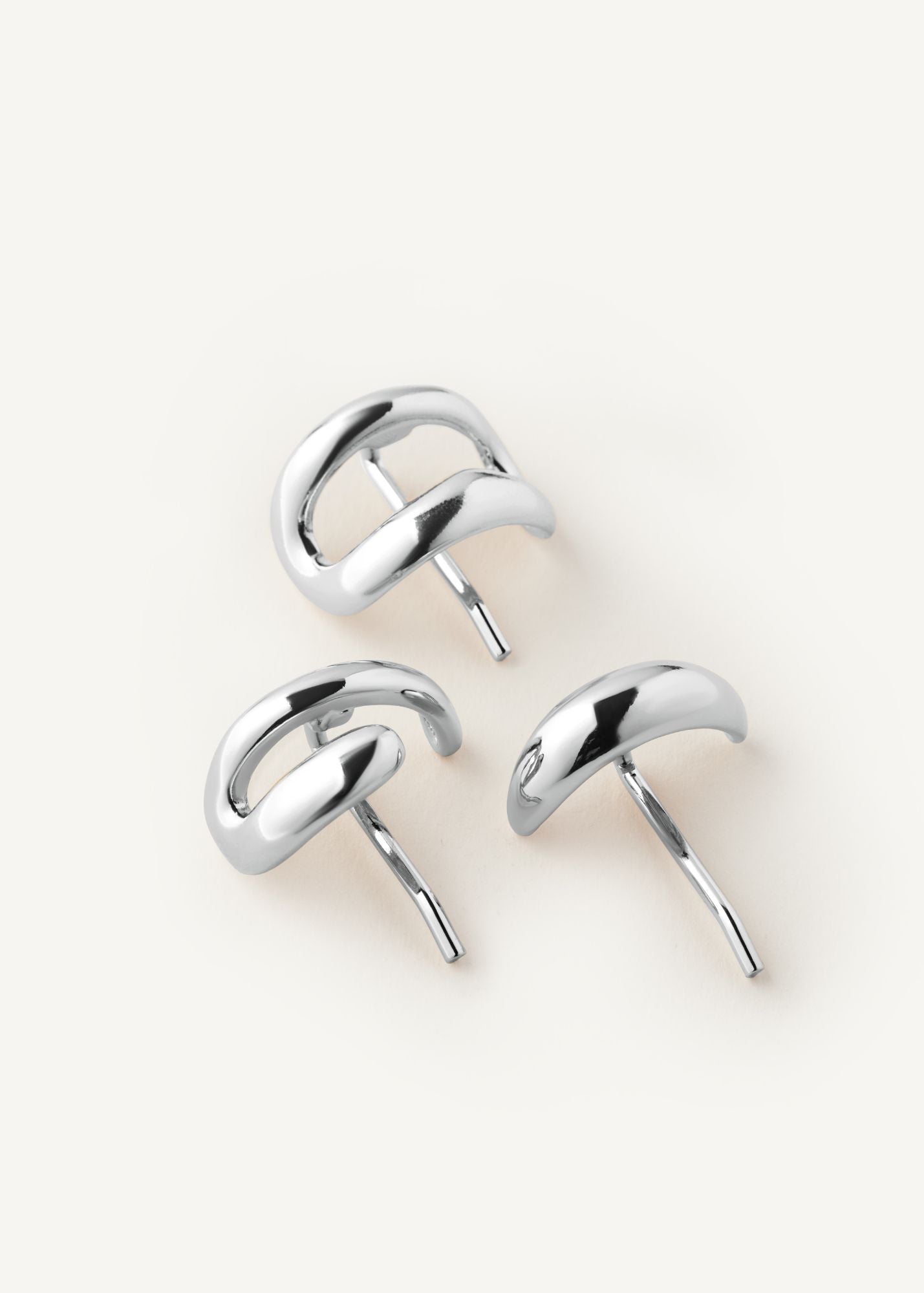



The french pin is one of those accessories that looks complicated but takes about 30 seconds once you know the trick. If yours has been sitting in a drawer because you never quite figured it out, this post is for you.
We are going to walk through 5 different ways to wear a french pin, starting with the basics and building up to styles that look like you actually tried. Every style works for long and medium hair, and we have included tips for fine hair and thick hair throughout.
Quick tip: a french pin works best on second-day hair or hair with a little texture. Freshly washed, slippery hair is harder to grip. If your hair is freshly washed, run a small amount of dry shampoo through before you start.
First, How Does a French Pin Actually Work?
A french pin is a U-shaped pin, usually made from metal or cellulose acetate, with two prongs that you slide into twisted or folded hair to hold it in place. Unlike a hair tie or a claw clip, it holds hair purely through friction and the tension of the twist.
The key thing to understand: the pin does not hold the style on its own. You create the shape first, then the pin locks it in. Once that clicks, every style below becomes easy.

Style 1: The Classic French Twist
This is the foundational french pin style. Once you have this one down, everything else follows naturally.
Step 1: Gather your hair
Pull all your hair into a low ponytail at the nape of your neck, holding it with your non-dominant hand. Do not tie it.
Step 2: Twist upward
Twist the ponytail upward, rolling it toward your head until it folds flat against the back of your head.
Step 3: Tuck the ends
Fold the ends of your hair down and tuck them underneath the roll, or leave them loose at the top for a softer look.
Step 4: Insert the pin
Hold the roll flat with one hand. With your other hand, slide the french pin horizontally through the roll, pointing toward your scalp. Push it in until both prongs are buried in your hair and the pin feels secure.
That is it. The whole thing takes under a minute once you have done it a few times.

Style 2: The Loose Chignon
The chignon is a low, soft bun that sits at the nape of your neck. It looks polished without looking stiff, and it works especially well for medium and fine hair.
Step 1: Create a low bun
Gather your hair at the nape of your neck and twist it into a loose bun. Do not worry about it being perfect. A slightly messy shape actually holds the pin better than a tight, smooth bun.
Step 2: Secure with the pin
Slide your french pin through the bun horizontally, angling the prongs downward toward your scalp. If the bun is on the larger side, use two pins crossing at a slight angle for extra hold.
For fine hair: use a smaller bun and push the pin in at a slightly steeper angle so the prongs grab more hair.
For thick hair: divide your hair into two sections before twisting, layer them into the bun shape, then pin through both layers.
Style 3: The Half-Up Twist
This one is the most wearable for everyday use because it keeps hair out of your face without being a full updo. It works on every hair length from a bob to waist-length.
Step 1: Section the top half
Take the top half of your hair, from ear to ear. Leave the bottom half down.
Step 2: Twist and pin
Twist the top section loosely, then fold it up and secure it with the french pin the same way you would a full twist. Let the ends fan out slightly at the top for a relaxed finish.
The result is a style that looks intentional without any effort. A good option for the office, a dinner, or anything in between.
Style 4: The Pinned-Back Section
This is the simplest use of a french pin and the one most people overlook. Instead of an updo, you are just using it to pin back a section of hair on one side of your face.
Take a section from one side, twist it back loosely, and secure it with the pin behind your ear. It looks effortless because it is. This style works beautifully with the Kov French Pin in Oak, where the tortoise colour shows through your hair rather than disappearing into it.
Style 5: The Everyday Bun
This is the style most people are trying to achieve when they first pick up a french pin. No twisting, no braiding — just your hair gathered into a bun and held in place with one pin instead of a hair tie.
Step 1: Gather your hair
Pull your hair into a low or mid bun at the back of your head, the same way you would for a regular bun. Hold the shape with one hand.
Step 2: Insert the pin
With your other hand, slide the french pin horizontally through the bun, pushing the prongs toward your scalp. The pin should pass through the bun and catch the hair underneath for a secure hold.
Step 3: Adjust
Let a few pieces fall loose around the face if you want a softer finish, or keep it neat and close to the head for something more polished. Both work.
The result is a bun that stays without a hair tie, without a clip, and without any damage or crease when you take it down. Once you get the angle of the pin right it takes about ten seconds.
For thicker hair: use two pins crossing at a slight angle through the bun for extra hold.

A Few Questions We Hear a Lot
My french pin keeps slipping out. What am I doing wrong?
Almost always, the issue is that the hair is too smooth or the twist is too loose. Add a little texture with dry shampoo before you start and make sure the roll or bun has some tension in it before you insert the pin. The prongs need something to grip.
Can I use a french pin on short hair?
You need enough length to create a small twist or bun, so shoulder length or longer works well. For shorter hair, a half-up style or a simple pinned-back section is your best bet.
How many pins do I need?
For most styles, one is enough. For thicker or longer hair, two pins crossing slightly at an angle will give you a more secure hold.
Ready to Try It?
The Kov French Pin is available in Cellulose Acetate (Tortoise, Oak, Honey, Black), and metal (Gold, Silver), as well as seasonal colours when available. If you are not sure which Kov style is right for your hair overall, take our free fit quiz and find your match in under two minutes.